Sept. 14, 2023
A Family Tradition
By Milana McLead
Nariman Heshmati, MD, is a problem solver; the more difficult the issue, the better it suits him. Whether it's automating his house so the lights are motion activated, programming the fireplace to function with a remote, operating on a patient in a life- threatening situation, or perhaps even more daunting, fixing what's broken in health care, he's up for the challenge.
"We are designing a system that we will all need," he says. "Our patients want us to ensure that the health care system we have for them is the same one we want to be in, one that we would get care in ourselves. We've got the ability to design that system."
His passion for doing just that is more than a mantra, it's personal. His efforts to that end literally made a difference to his own family's life. "My kids were born at Providence, where I was division chief for women's and children's services at the time," he says. It was then the second- busiest labor and delivery unit in the state. As division chief and an OB-GYN, Dr. Heshmati and his team worked to improve the neonatal intensive care unit, striving for process and quality improvements.
"When my wife came in [for delivery], I knew it was too early," he says. As their newborn son, Robert, spent his first 10 days in the NICU, Dr. Heshmati understandably wanted him to have the best care and the best chance of surviving. "Then the irony hit me: All those things I'd worked on, that my team worked on ... my family was actually experiencing the result of those efforts," he says. "To me, it's not just a job. We are developing a system not only to take care of patients, but to take care of ourselves and our families."
Our patients want us to ensure that the health care system we have for them is the same one we want to be in, one that we would get care in ourselves. We’ve got the ability to design that system.
Working to fix that system also drives his involvement in the WSMA, advocacy, and organized medicine. During his earliest days in medical school at Florida State University, getting involved was heavily encouraged. He served on the political action committee of the Florida Medical Association, even spending a month embedded with the association's lobbying team at the Capitol in Tallahassee at the height of Florida's medical malpractice reform. The "sea of white coats on the steps of the Capitol demanding action" launched him into advocacy efforts that continue today.
"One of the hardest challenges being a physician is that we are in such a regulated industry, it's easy to feel that you lose autonomy and control. The system around you is deciding how you can provide care and all you want to do is provide that care," he says. "Being involved in the WSMA gave me visibility to how decisions are made, how to improve the system, and how to give voice to the physician perspective.
"When you're part of the WSMA, instead of feeling like the health care system is crumbling and patients can't get the care they need, you can feel like you're in the driver's seat to speak up to say, 'This system is not OK, and here is what we need to take care of the community.' "
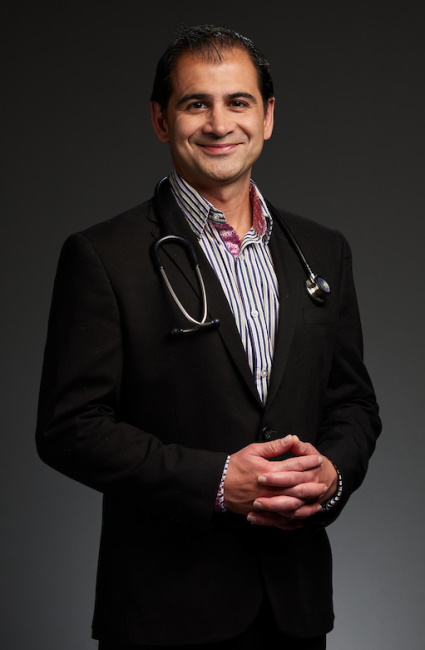
Taking care of the community is a thread that's woven into most, if not all, of what Dr. Heshmati thinks about in terms of leadership, advocacy, and impact. While he's done the clinical 80-hour week, been on call around the clock, developed departments, argued legislation, and testified in front of elected officials, he is now focused on where he can make the greatest impact: physician leadership. "In my leadership roles, I might be able to help 10 people, or 100 people, or maybe 1,000 people. That ability to make a broader impact is what drives me," he says. "I feel strongly that medical organizations need physician leaders. To take care of patients, we need to have the right ingredients, the right rules, the right system around us. If we're not at the table helping guide that process, that's when we see regulations we don't need, policies that don't make sense, and interference in the patient-physician relationship."
Early in his life, he saw firsthand the value and importance of the patient- physician relationship. As a child, he watched his parents taking care of patients. It was practically destiny that Dr. Heshmati would become a physician, considering that his father, two uncles, and older brother are physicians, and his mother and older sister are psychologists. Growing up near Florida's Cape Canaveral, instead of dreaming about space adventures, he hung out at his parents' primary care medical offices while they worked. "While my dad was seeing patients, my mom ran the office," he says, "and I was there too, playing with toys."
That childhood may sound idyllic, but his family's journey to that point was anything but. Dr. Heshmati was born in Iran on New Year's Day 1980. As he entered the world, revolution had upended his country; it was day 59 of the seizure of the American Embassy in Tehran and the Iran-Iraq war was raging. His father was an orthopedic surgeon and head of surgery at the major army hospital in Tehran, so though his work was deemed necessary, it wasn't necessarily safe for him or his family to remain in Iran. After months of covert planning, the elder Dr. Heshmati and family left everything behind, fleeing their homeland, first to Europe and ultimately to Florida's Satellite Beach.
His father reestablished his credentials and served the community in primary care, then as Brevard County's public health director, and ultimately as a revered public health advocate: When he retired, the building he worked in was renamed in his honor. He was widely known for innovative programs he created to ensure access to care, maternity care, vaccines, and more.
"My dad was a huge influence," Dr. Heshmati says. His father modeled, well before it was popular, that everyone should have access to health care. "Everyone knew my dad and would tell me 'My child was sick and was able to use this program [your dad created].' That had an impact on me. I realized if I go into medicine, the positive impact I can make on a community can be significant."
His parents shaped and inspired his life, from making a positive impact in everything you do ("keep your community healthy") to having a strong work ethic ("work hard to get results"). Their journey of leaving everything behind and rebuilding-new land, new language- also inspired a sense of optimism for the younger Dr. Heshmati. "They had a sense of no matter what the challenge is, we have the ability to get things done here," he says.
As incoming president of the WSMA, he's optimistic about getting things done, together. "What speaks to me is the power we have when our voices are unified," he says. "When we come together, we have significant power to implement change. Some of the brightest and most dedicated people I've ever seen are in health care. If you had to pick a team to improve health care, this is the team. Our members are that team. We can make this the best place to practice medicine and receive care."
Milana McLead is WSMA's senior director of strategic communications and membership.
Snapshot
Family: Met his wife, Kathryne, during his undergraduate studies at the University of Florida. Their son, Robert, is 10; their daughter, Sirena, is 7.
First language: Farsi. He still understands it but must work at speaking it.
Day job: Senior regional medical director for surgery and specialty for Optum’s Washington market. Oversees more than 40 departments and multiple ambulatory surgical centers between The Polyclinic and The Everett Clinic and has accountability for more than $400 million in revenue.
Office décor: Drawings by his kids: “I love having these reminders of my family in my office. Why do we do what we do? It’s for our kids.”
Social media: Includes his “DrNari” YouTube channel and an endless stream of selfies on Twitter. “The first thing patients do when they have concerns is go to Google. Better to put the right information out there because they’re going to look there anyway.”
Starting the day: A 4 a.m. wake-up alarm, a work out, then a 10-mile e-bike ride to his office in a nondescript, highly secure building in Everett. “Every day we have an opportunity to make an impact. When I wake up, I look forward to that.”
Favorite quote: “Coming together is a beginning, staying together is progress, working together is success.”
This article was featured in the September/October 2023 issue of WSMA Reports, WSMA's print magazine.